

Then I got curious about how a juice can sit in a store for weeks and still taste the same. The answer changed what I buy.
Methods vary by brand, but most commercial juice follows the same basic path:
Fruit is pressed or pulped in large industrial machines, and the liquid is separated from the pulp.
Pulp and fiber are strained out, which is why most bottled juice is smooth and clear.
This is a big one. The juice is put in giant vats to brings the juice to a high temperature to kill bacteria and slow spoilage. But wait until you hear what this heating does to the juice.
It can sit in a warehouse, a truck, and a store cooler for weeks, even months before you open it.
Heating juice detroys its vitamins, especially vitamin C. How much depends on the fruit and the process, so the loss varies, but it's real.
When the pulp is removed, so is the fiber. But fiber is what your body needs to slow down how quickly the sugar in fruit reaches your bloodstream. Without the fiber, your left with just sugar water, which can cause adverse health effects.
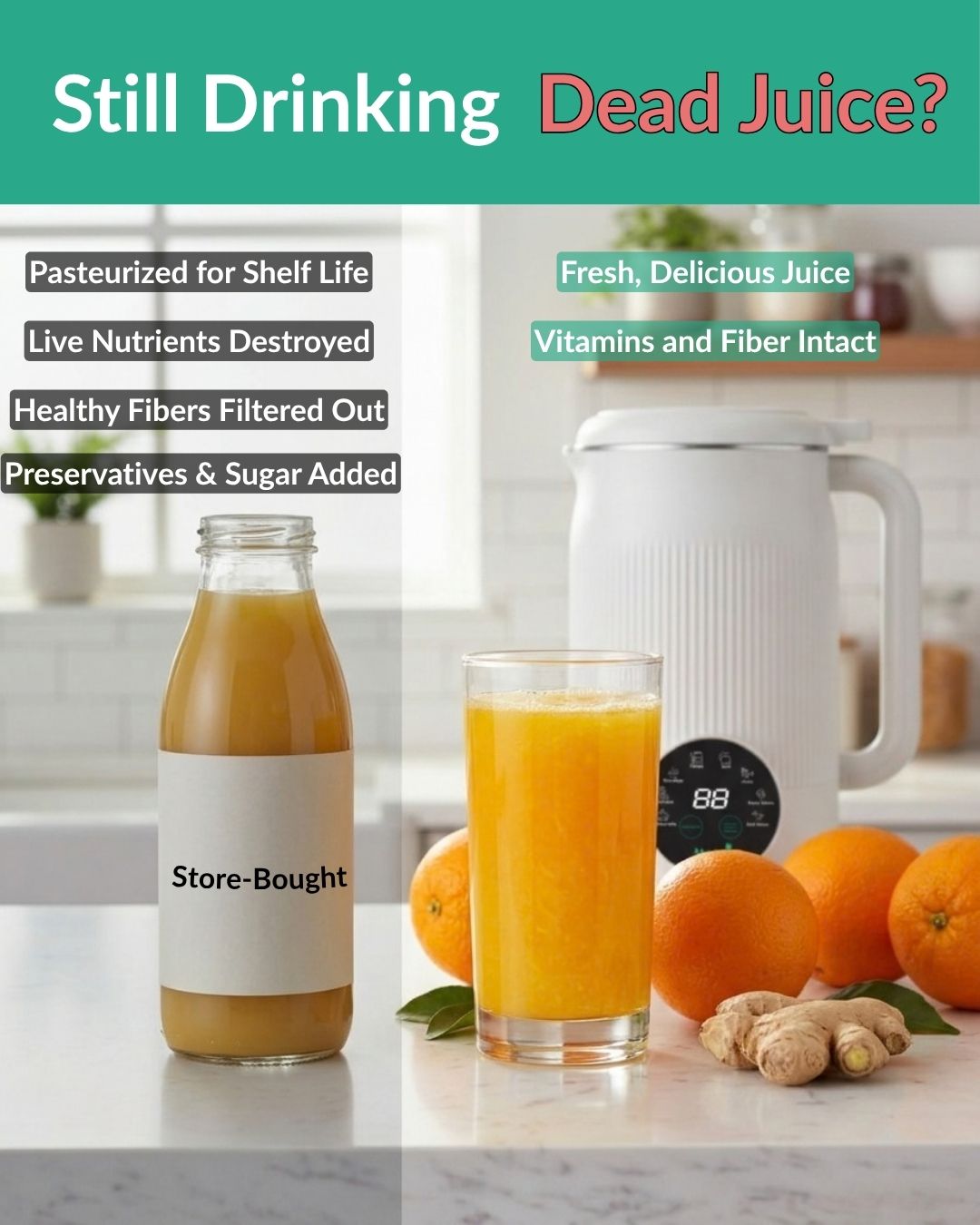
Fresh means made from whole fruit, with nothing heated, nothing filtered out, and a few minutes between the blender and your glass. There's a name for it: whole juicing. Instead of extracting liquid and discarding the rest, you blend the whole fruit so the fiber stays in the drink.
The problem for most people isn't believing it's better. It's that making juice at home is a chore: a tiny feed chute, a pulp basket, and a stack of parts to scrub. Most people quit within weeks.
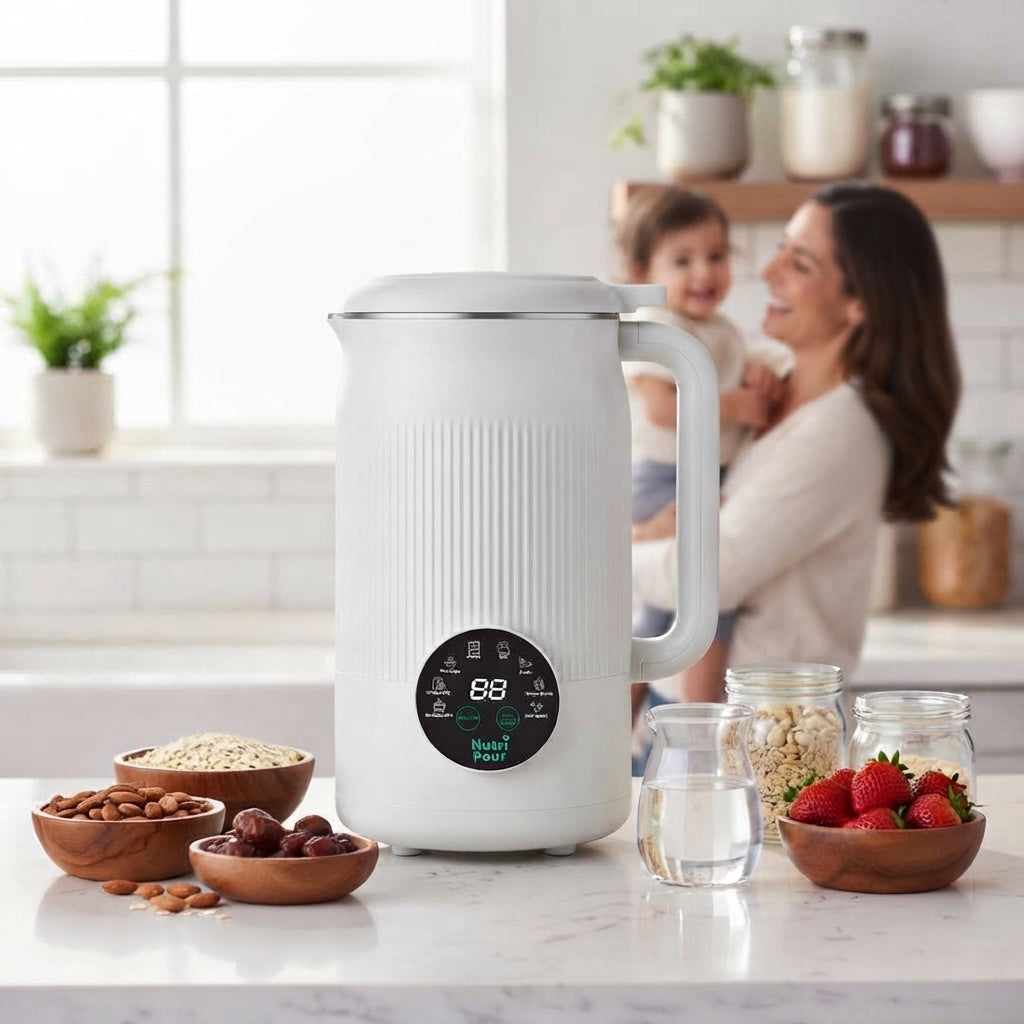
I found a NutriPour, which blends whole produce instead of extracting it. I load the fruit in, press start, and walk away. When it's done, it stops on its own with a little beep beep beep, and the self-clean cycle takes care of the rest with soap, water, and one button. There's no pulp basket and nothing to disassemble.
If I want a lighter, pulp-free glass, there's an optional straining bag. Most days I don't bother, because the fiber is the whole reason I switched.
| NutriPour | Traditional Juicer | ||
|---|---|---|---|
| Easy Cleanup |
|
|
|
| Uses the whole produce |
|
|
|
| Turn on and walk away |
|
|
|
| Self-cleaning |
|
|
|
| Also makes milk, soup, hot drinks |
|
|
|
"I use it almost every day. Whatever fruit or vegetables I have on hand, one button, no pulp bin to deal with afterward. It's replaced my juicer, my blender, and my soup pot."
— Morgan M., verified customer
30-day money-back guarantee & 1 year warranty
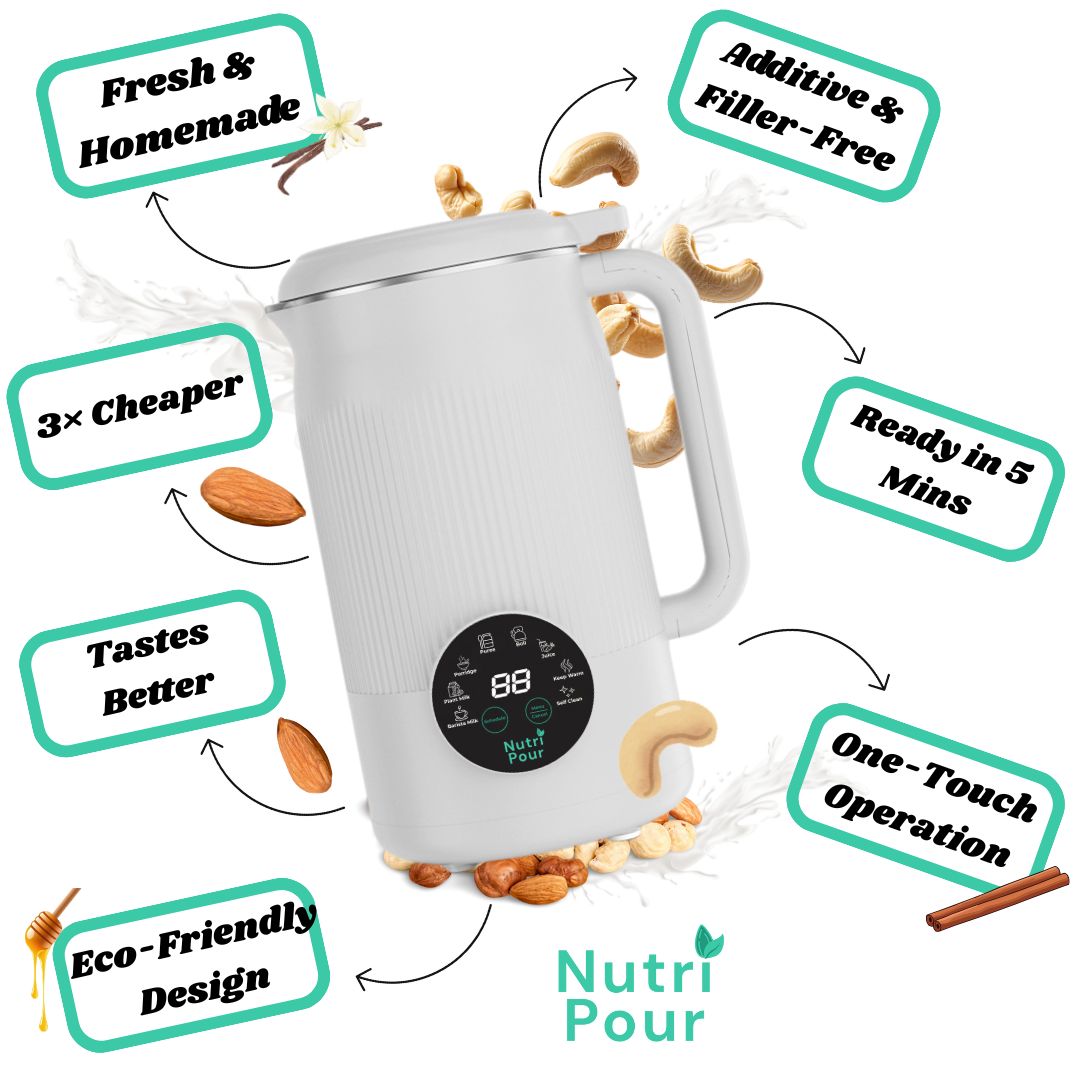
The same stainless steel machine makes almond and oat milk, cooks soup, boils water for tea, and keeps drinks warm. Between all of that, it's replaced my juicer, my blender, and the kettle on my counter.
If the price gives you pause, I understand. What tipped it for me was the 30-day return window and the year of warranty coverage, which is easier to offer when a product is built to last.
I get the hesitation — it's more than an impulse buy, and it's reasonable to wonder if it's actually worth it or just another kitchen gadget that ends up in a cabinet.
What made the decision easier for me was the guarantee: 30 days to send it back if it's not for you, plus a full year of warranty coverage on the unit itself.
A cheap juicer doesn't usually come with that kind of backing, and there's a reason for that.
If sugar crashes after "healthy" juice sound familiar, this is worth five minutes of your time.