Reported easier digestion after switching to whole-food drinks


Carrots, apple, ginger, whatever green thing looked least tired at the store. I felt like I was doing something right for my body — right up until 10am, when I'd crash hard enough to need a second coffee just to function.
I blamed sleep. I blamed the coffee. I blamed everything except the giant glass of "healthy" juice I'd just had, because how could that be the problem?
Turns out, it was.
A traditional juicer — centrifugal or cold-press, cheap or expensive — does one specific thing: it separates the liquid from the pulp, then throws the pulp away. What's left in your glass is essentially fruit sugar and water, with the fiber gone.
Fiber is the part that slows everything down. Without it, sugar from fruit hits your bloodstream fast, and registered dietitians have flagged this directly: fruit-forward juices can cause blood sugar spikes that a fiber-rich smoothie simply wouldn't. That's the crash I was chalking up to bad sleep. It was a sugar spike, followed by the inevitable drop.
"You're essentially bypassing your body's own defense mechanisms — the ones designed to help you feel satiated in the first place."
And it's not a small effect. A 2019 review of 185 separate studies, published in The Lancet, linked higher fiber intake to meaningfully lower risk of heart disease, stroke, type 2 diabetes, and colorectal cancer. Juicing, by design, removes exactly the thing that review is talking about.
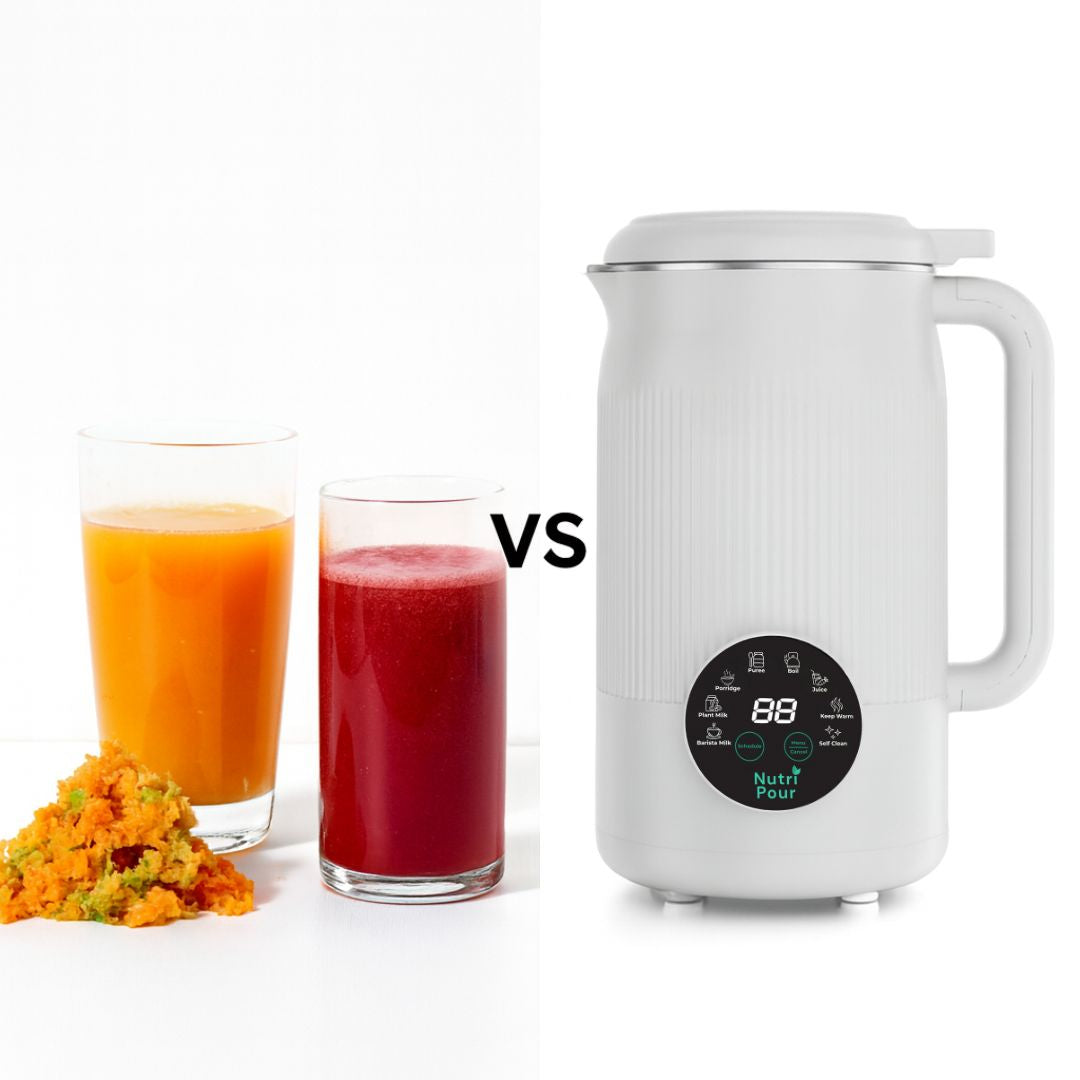
Once I started looking into this, I found out there's an established term for drinking your fruits and vegetables with the fiber still in:
Instead of extracting liquid and discarding the rest, you blend the whole fruit or vegetable into a drinkable form, pulp included.
It's not just a fiber technicality, either — one study found that juice made by blending whole fruit actually had higher antioxidant levels and more beneficial plant compounds than juice made by a traditional extraction juicer. The pulp isn't just filler. It's where a lot of the good stuff lives.
One physician's advice on this, when asked directly whether juicing is healthy, was about as blunt as it gets:
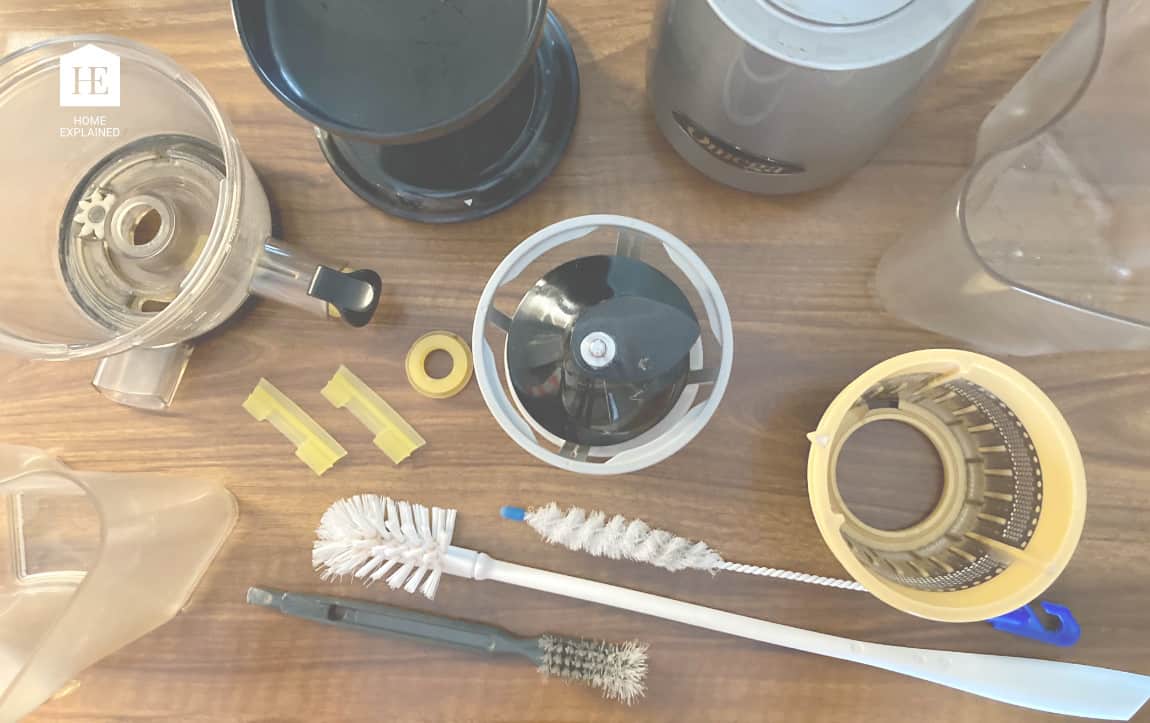
Oxidation - Fast-spinning centrifugal blades generate heat and air exposure that can degrade nutrients before the juice even hits your glass.
Wasted produce - Centrifugal juicers are notorious for leaving wet, juice-soaked pulp behind — you're buying produce and throwing a chunk of it, and its value, straight in the trash.
The cleanup - Mesh screens, pulp baskets, multiple parts to disassemble and scrub — it's consistently the single most-cited complaint in juicer reviews.
The price cliff - Budget juicers waste produce and leave pulp wet; the cold-press models that don't tend to run $200–450, before you've bought a single carrot.
I ended up replacing my juicer with a machine that blends instead of extracts — a NutriPour, which I'd originally bought for making almond milk. I didn't expect it to become my juicer too, but the "Juice" setting does exactly what a whole-juicing blender does: it pulverizes the entire fruit or vegetable, fiber included, into a smooth, drinkable liquid using a 12-blade system and a strong motor built for this specific job.
The part I actually liked best is that it doesn't force a choice. If I want it pulp-free, there's an optional straining bag to pull the fiber back out for a lighter, juice-bar texture. Most days, I don't bother — the blend is already smooth, and I'd rather keep the fiber in anyway.
| NutriPour | Traditional Juicer | ||
|---|---|---|---|
| Keeps the fiber |
|
|
|
| Uses the whole produce |
|
|
|
| Pulp-free option |
|
|
|
| Self-cleaning |
|
|
|
| Also makes milk, soup, hot drinks |
|
|
|
Better Digestion
Reported easier digestion after switching to whole-food drinks
Avoid additives
Felt better cutting preservatives and additives
Big Savings
Saved money versus store-bought drinks
"I use it almost every day. Whatever fruit or vegetables I have on hand, one button, no pulp bin to deal with afterward. It's replaced my juicer, my blender, and my soup pot."
— Morgan M., verified customer
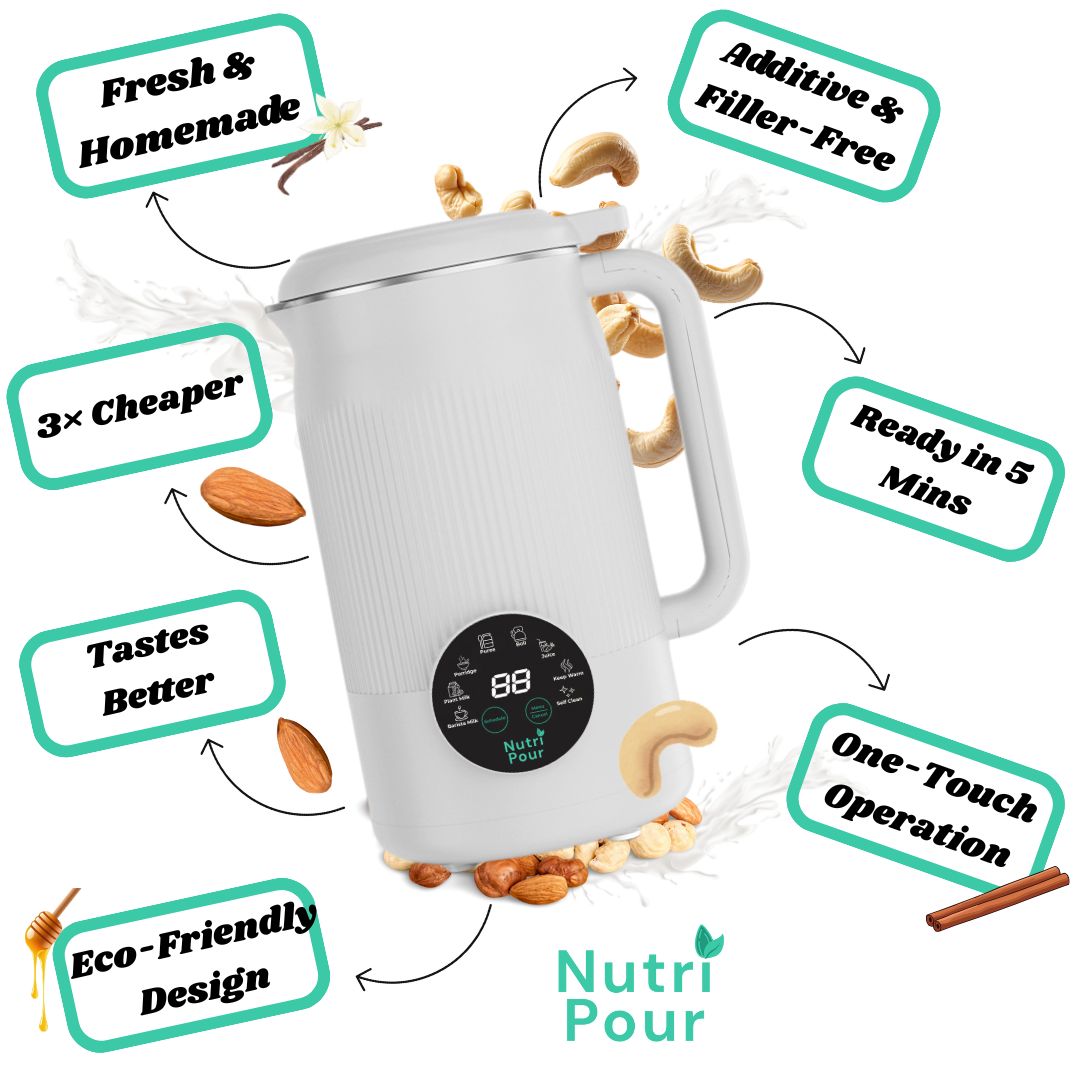
30-day money-back guarantee & 1 year warranty
I bought this for almond milk originally, kept it for the juice, and I'm still finding uses for the rest of it.
It has a dedicated mode for nut and oat milk, a soup setting that gently cooks and stirs so nothing scorches, a keep-warm function, and a plain boil-water setting for tea.
The 40oz stainless steel interior means it's making enough for the whole household at once, not one glass at a time.
it's the whole-juicing machine, but it also happens to replace your almond milk carton, your soup pot, and your kettle.
I get the hesitation — it's more than an impulse buy, and it's reasonable to wonder if it's actually worth it or just another kitchen gadget that ends up in a cabinet.
What made the decision easier for me was the guarantee: 30 days to send it back if it's not for you, plus a full year of warranty coverage on the unit itself.
A cheap juicer doesn't usually come with that kind of backing, and there's a reason for that.
If sugar crashes after "healthy" juice sound familiar, this is worth five minutes of your time.